Skip to content
Free worldwide shipping 30-day money-back guarantee
TELOSIN
EN / USD

Explore Telosin

Beauty technology and skincare, made personal.

English · Prices in US dollars.

Science & design

The detail behind the light.

Explore Telosin’s light technology, device design and research. Find the specifications, evidence and clearance information relevant to each device.


Firmness starts beneath the surface.

Collagen gives skin much of its structure. Understanding how it changes helps you choose care with a clear purpose.

In the dermis, collagen forms a network that helps skin hold its shape. Elastin helps it stretch and return. Cells called fibroblasts help produce and maintain this supporting network.

As skin ages, collagen renewal slows and its supporting network becomes more fragmented. Sun exposure adds to this change. Skin can look less firm, with a more uneven texture and more visible lines.

Red and near-infrared LED have been studied for their effects on skin cells and collagen. A controlled trial using 633 nm and 830 nm light observed collagen and fibroblast changes, alongside changes in wrinkle appearance, using its own study equipment.

Telosin’s published report assessed an earlier red/infrared device at eight weeks and reported improvements in visible lines and texture. It did not measure collagen directly or test Y Pro. Results vary; an exact Y Pro results timeframe has not been established by that report.

Different wavelengths. Defined biological roles.

Red & near-infrared: photobiomodulation

Red and near-infrared light can influence cellular activity, including energy processes and collagen-producing fibroblasts. This interaction is known as photobiomodulation. Collagen gives skin structural support, making it central to the appearance of firmness and smoothness.

Blue: a different pathway

Blue light acts through a different pathway, interacting with light-sensitive compounds in C. acnes bacteria. Telosin’s blue-light approach focuses on blemish-prone skin and a clearer-looking complexion.


A personal ritual of light, warmth and vibration.

Targeted LED combines with temperature-controlled contact warmth and vibration, creating a warming, gently massaging sensation on the skin.

A cordless, handheld format brings light therapy into everyday skincare. Personal guidance helps customers follow the recommended treatment course and build a consistent routine around their skin priorities.


Find your light.

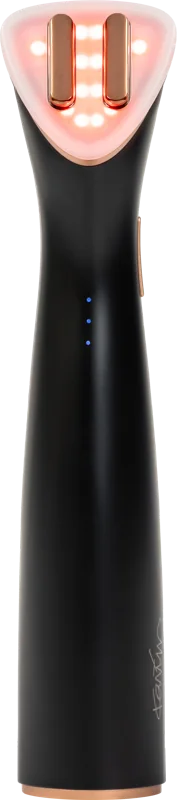
Y Pro Red brings red and near-infrared LED together for facial rejuvenation, with a focus on the appearance of firmness, lines, texture and radiance.

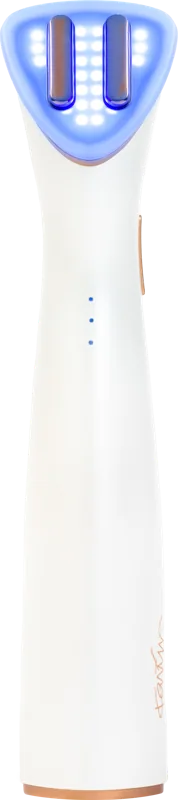
Y Pro Blue uses blue LED for blemish-prone skin. Both devices have a handheld format, skin-contact activation and temperature sensing.

Two targeted light therapies for different skin needs, used individually or alternated as one complementary system.

Y Pro Red · TLSVSR1
633 ±5 nm red + 830 ±5 nm near-infrared
Y Pro Blue · TLSVSB1
415 ±15 nm blue LED
Technology
Light-emitting diodes (LED)
Y Pro features
Precision LED, controlled contact warmth, vibration and smart contact sensor


Lee et al., 2007 · Controlled clinical trial

Red & near-infrared light. The research.

A prospective, randomised, placebo-controlled, double-blinded, split-face study evaluated LED phototherapy in 76 participants. The study tested 633 nm red light, 830 nm near-infrared light and combined treatment against sham exposure.

The researchers assessed visible wrinkles and elasticity and examined skin samples. They reported changes in collagen and activated fibroblasts with the study equipment. This helps explain why red and near-infrared LED are studied for skin rejuvenation.

This was not a Telosin or Y Pro trial. A shared wavelength does not establish equivalent light dose, treatment delivery or results. Its protocol is not a Y Pro treatment instruction.

Study type
Controlled trial with sham comparison
Light studied
633 nm red and 830 nm near-infrared
Measured
Wrinkle appearance, elasticity and tissue changes


Dual Transformation · Independent research

The synergy of red & blue

Red and blue light bring complementary actions to light therapy. Blue light acts on compounds within blemish-associated bacteria, while red light has been studied for its role in inflammatory responses. Clinical research has explored this combination for acne, with some results favouring combined light over blue light alone. This research provides a scientific context for exploring red and blue light together; it does not establish an extra benefit from pairing the two Y Pro devices.

Clinical trials have reported improvements in acne with combined red and blue light. Some comparisons favour the combination, although the advantage over blue alone is not consistent across all outcomes or assessment times.

Combination studies used other devices and treatment protocols; they do not establish improved results from pairing Y PRO Red and Blue.

2000 · Randomised trial · mixed red + blue light

An early comparison with blue light alone

107 participants · 415 nm blue + 660 nm red · 12 weeks

The mixed-light group had a 76% average reduction in inflammatory acne lesions at week 12. Its advantage over blue alone was statistically significant at weeks 4 and 8, but not week 12. Participants used the study light sources daily for 15 minutes.

Papageorgiou, Katsambas & Chu · British Journal of Dermatology

2013 · Double-blind trial · red + blue LED

Combined light against a sham treatment

35 participants · 420 nm blue + 660 nm red · sham-controlled

After four weeks of treatment, the combination group had fewer inflammatory and non-inflammatory acne lesions at the final 12-week visit; the sham group showed no significant change. The trial did not compare the combination with either colour alone, so it cannot establish an added benefit over one colour.

Kwon et al. · British Journal of Dermatology

2026 · Randomised trial · blue versus red + blue

Comparing two at-home light approaches

23 completers · 8 weeks

Inflammatory lesions decreased in both groups. Lesion-count changes did not differ significantly between groups, although the combined-light group had better investigator severity ratings. The study was small and open-label.

Friedmann et al. · Dermatologic Surgery

These combination trials concern acne, not an added anti-ageing benefit. Their wavelengths, light doses and treatment schedules differ from Y PRO. A combined-light study is not evidence for an alternating Y PRO schedule or a reason to increase treatment time.


Blue light. The research.

Explore studies of blue light, skincare regimens and the wider LED evidence for acne. The combination trials are explained in the red + blue section above.

2025 · Systematic review · red, blue & combined LED

At-home LED: the wider evidence

6 randomised trials · 216 participants

The pooled analysis found improved acne outcomes compared with controls. Devices, light doses and routines varied, limiting how directly the findings apply to other products.

Ershadi & Barbieri · JAMA Dermatology

2011 · Randomised trial · blue LED

Blue light compared with a sham device

30 participants · paired acne lesions

Lesions treated with blue light improved in size and redness and resolved faster than sham-treated lesions. This was a short, lesion-level study using a home-use device under clinic supervision.

Gold et al. · Journal of Cosmetic and Laser Therapy

2015 · Randomised trial · blue LED + skincare

Blue light within a skincare regimen

41 participants · 12-week assessment

Inflammatory lesion counts improved with 414 nm blue light plus proprietary skincare compared with control. Because the treatment combined light and creams, it does not isolate the benefit of blue light alone.

Ash et al. · Journal of Cosmetic and Laser Therapy

2021 · Systematic review · blue light

A closer look at inflammatory acne

8 randomised clinical studies reviewed

The review reported improvements across the included studies and identified blue light as a promising approach. It also called for more detailed trials to establish its effects more firmly.

Diogo et al. · Sensors

These are studies of the named research devices and treatment regimens, not clinical trials of Y Pro Blue. Reviews include overlapping trials, so their participant counts should not be added together.


Patented design. Precision at the point of contact.

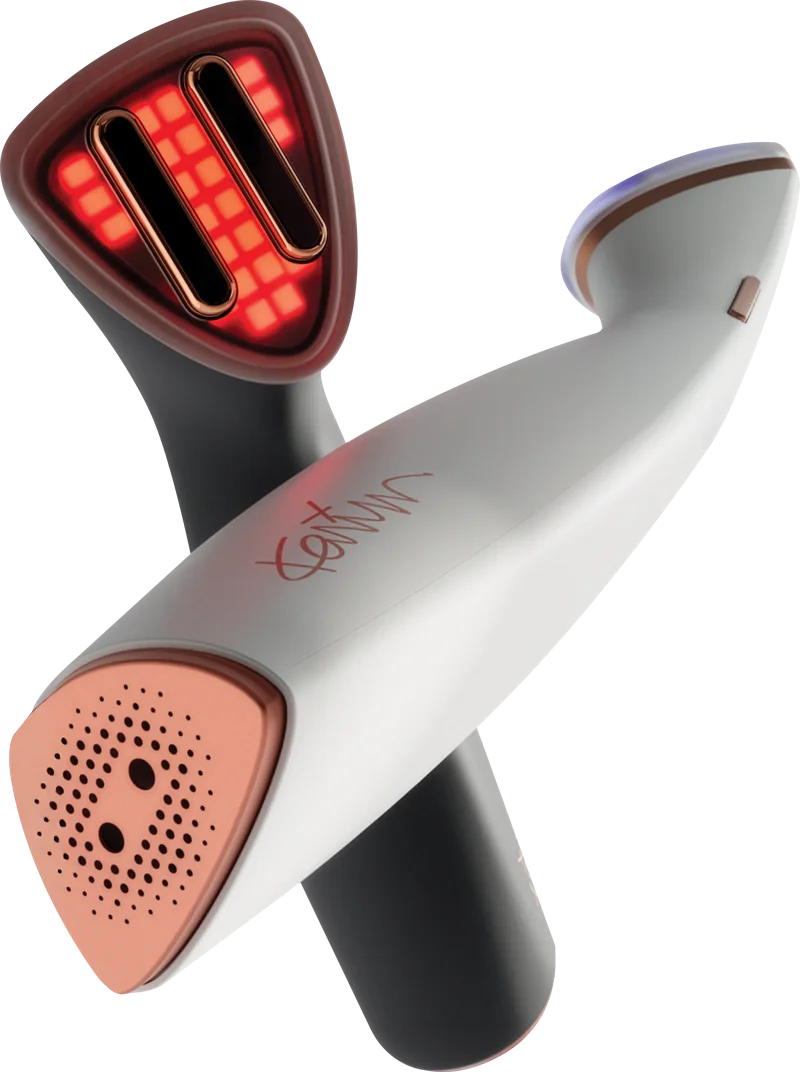
Y Pro Red and Blue treatment heads with transparent polycarbonate surfaces and two integrated metal strips
The triangular treatment head and dual metal strips, in the design by Karim Rashid.

The transparent polycarbonate head forms the treatment surface itself, transmitting light from the LEDs to the skin. It combines optical clarity with a lightweight, impact-resistant construction.

Polycarbonate has a place in NASA’s space-helmet engineering, including a documented helmet-and-visor design. In Telosin, a transparent polycarbonate treatment head brings optical clarity, light weight and impact resistance to the surface that delivers LED light to the skin.

The NASA reference describes an application of the material family. It does not indicate NASA involvement in, endorsement of, or certification of Telosin, or that the material grades are identical.

Light
Transparent grades can transmit visible and near-infrared light.
Form
Mouldability gives designers freedom to create complex shapes.
Handling
Low weight and impact resistance suit handheld products.

Shaped for facial contours

The triangular treatment head follows facial contours to help maintain skin contact during treatment. Its ergonomic shape supports comfortable handling.

Dual metal strips

Two metal strips integrated into the treatment head are designed to reflect and redistribute light, spread warmth and support vibration transfer to the skin.

Responsive control

Skin-contact activation, temperature sensing and one-button operation bring responsive control to a cordless, handheld device.

Understanding the specification

Optical performance depends on the material grade, thickness and finish. General polycarbonate data explains the material family; it is not a measurement of the finished Telosin device.


ICE Cooling. A different dimension of body care.

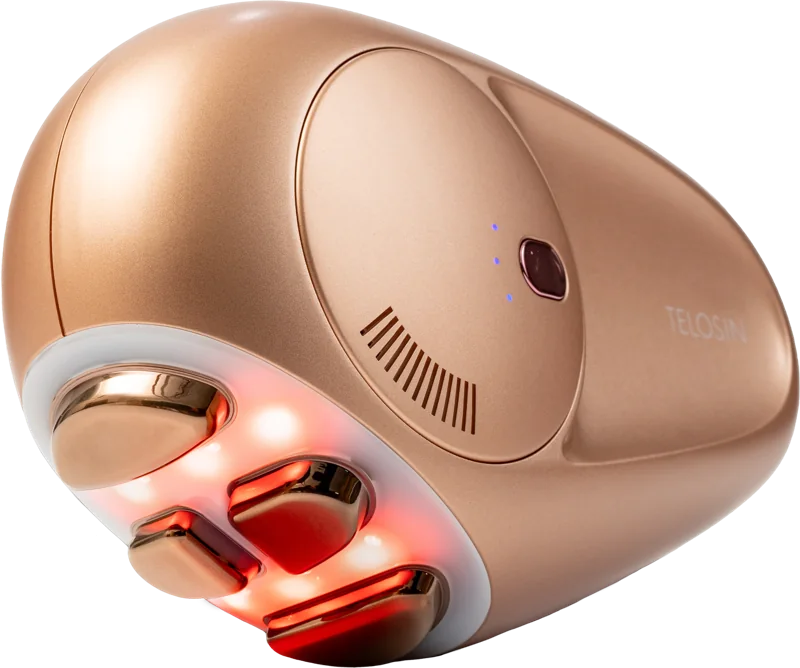
Body Sculpt Advance showing its metal treatment head and red LEDs
Body Sculpt Advance combines light, microcurrent and vibration with cooling and heat.

Body Sculpt Advance and Classic combine red and near-infrared light with microcurrent and a controlled cooling effect. Designed to support body contouring, firmness and the appearance of smoother skin. Used with the Firm & Tone gel.

Apply the supplied conductive body gel and use each mode according to the instructions.

Classic & Advance
Red and near-infrared light, microcurrent and controlled cooling
Advance
Heat and ICE Cooling modes; 10-year device warranty
Classic
2-year device warranty


A discovery in dermatology

Cooling research in context.

Clinical cooling research and home body-care devices use different equipment and protocols. Research into clinical fat reduction does not establish a fat-reduction benefit for Body Sculpt.


Three ways to look at skin.

The study considered the appearance of facial lines and wrinkles, skin texture and discoloration. These concerns offer a useful starting point for understanding the research.

Fine lines & wrinkles
The appearance of lines across the face.
Skin texture
The study’s combined assessment of pores, elasticity and firmness.
Discoloration
The appearance of uneven colour and brown pigmentation.


A closer look at skin rejuvenation.

A 30-participant Telosin study explored facial wrinkles, skin texture and discoloration using red and infrared LED with contact warming. Photographs were assessed by an independent physician.

Explore the response ratings at the reported eight-week assessment, then read the study details and original report.


85%

Wrinkle appearance

Medium or excellent improvement in the appearance of wrinkles.

90%

Skin texture

Medium or excellent improvement in skin texture, assessed as a combined category.

8weeks

Physician assessment

The study’s reported follow-up assessment.

Reported physician assessment of the earlier Telosin red and near-infrared device. Medium and excellent response categories combined. Individual results vary.

Participants
30
Reported follow-up
8 weeks
Assessment
Physician ratings
Reported response ratings at eight-week follow-up

Reported ratings (%) · Table 2

Percentages are the response-rating values printed in Table 2. The report does not explain the denominator or rounding consistently enough to convert them into participant counts. They are not percentage reductions in wrinkles, pigmentation or other skin measurements.

Study of an earlier Telosin red/infrared device with contact warming, not Y Pro. Individual results vary.

Read the original report · PDF
Method & source data

The report names Telosin and pictures an earlier handheld device. It does not identify Y Pro Red, Y Pro Blue or Telosin X by model name. These percentages describe the studied device, not verified results for every Telosin model.

The study used photographs assessed by an independent physician. There was no reported control group. The report contains inconsistencies in treatment schedules and summary figures; these charts reproduce Table 2 at its stated eight-week assessment. Read the full report for the methods and study limitations.

Original response ratings · Table 2
AssessmentExcellentMediumPoorNo response
Improvement in wrinkling75%10%15%Dash in source
Skin Texture80%10%10%Dash in source
discoloration60%10%30%Blank in source

The source does not explain rounding; blank cells and dashes are reproduced as recorded.


Light, delivered in contact.

Y Pro is a handheld device with skin-contact activation. The treatment head rests against the skin while you work through the areas described in the manual.

A mask and a handheld device create different routines. Choose by the model’s specifications, intended use and instructions, rather than the format alone.


From technology to your routine.

With Y Pro, you guide the treatment by hand. One power button starts the device, skin contact activates the light and lifting the head stops it. Preparation and the treatment schedule complete the routine.

Explore the steps for your model and ask our team about getting started or caring for your device.

The experience continues beyond the store, with personal guidance on integrating light therapy into an existing skincare routine. Customers can build on their device care with complementary Telosin serums, creams and masks.


Explore the research.

Read the original skin-rejuvenation report and learn more about how the study was assessed.


Original report · 4 pages

Facial rejuvenation study

Assessment of the Efficacy and Safety for Wrinkle Reduction and photoaging improvement using a novel Home-Use Device with Diode Arrays and dermal Heating

By N. Claut, M.Sc. and Y. Choubernetski, M.Sc.

Read the original report · PDF